Electrician insurance
For sparkies working alone or running a small crew. A fault that starts a fire, a shock from a fitting, solar and battery installs, a van full of testing gear: we ask about the electrical work you actually do, then get you quotes from insurers.
5.0 from 6 Google reviews, October 2026(opens Google in a new tab)
General advice only. Read the policy documents we send with your quote before you decide.
What it can cover for electricians.
Examples of the claims electrician insurance can respond to. Whether a claim is paid, and how much, is up to the insurer under your policy.
A fault starts a fire after you leave
A connection you made in a switchboard works loose and starts a fire weeks later, damaging the client's kitchen. Damage to someone else's property caused by your work can fall under public liability.
Someone gets a shock
A tenant gets a shock from a power point you replaced and needs hospital treatment. Injury to a member of the public from your work can fall under public liability.
Rain gets in after a solar install
You fit panels, a tile cracks or a roof penetration isn't sealed, and the next storm brings water through the ceiling. Damage to the client's home caused by your work can fall under public liability. Many insurers ask about solar and battery work, so make sure it's on your policy before you start.
You drill through a pipe
Chasing a wall or fixing a cable tray, you drill into a hidden water pipe and flood the room. Damage to a client's property like this can fall under public liability, depending on the policy wording.
Testing gear goes from the van
An insulation resistance tester, a multifunction tester and a thermal camera taken from the van overnight. Tool cover can pay to repair or replace stolen or damaged tools and equipment, up to the policy limits (the most the policy pays for a claim).
Something you supplied fails
A light fitting or appliance you supplied and installed overheats and damages the ceiling around it. Products liability, which some public liability policies include, can respond to claims about goods you supply, depending on the policy.
What it usually doesn't cover.
Every policy is different, and the policy wording is what counts. These are the usual gaps.
- The cost of redoing your own faulty work: the policy looks at the damage it causes, not the fix
- Injury to you or your workers: that's workers comp, or personal accident cover for yourself
- Design work and advice, such as designing a solar system or a switchboard layout for someone else: that's professional indemnity
- Work you didn't tell the insurer you do, such as solar, batteries, high voltage or industrial sites declared as domestic only
- Work done without the licence it needs
- Fines and penalties from a regulator
- Testing gear left in an unlocked vehicle or on an open site, unless the policy says otherwise
The covers electricians ask about.
In the order most electricians think about them. Each one is explained on its own page.
- Public liabilityFire or a shock caused by your work is the kind of claim public liability can respond to, so electrical contractor insurance usually starts here. Builders and strata managers usually ask to see this cover, and some state licences do too.
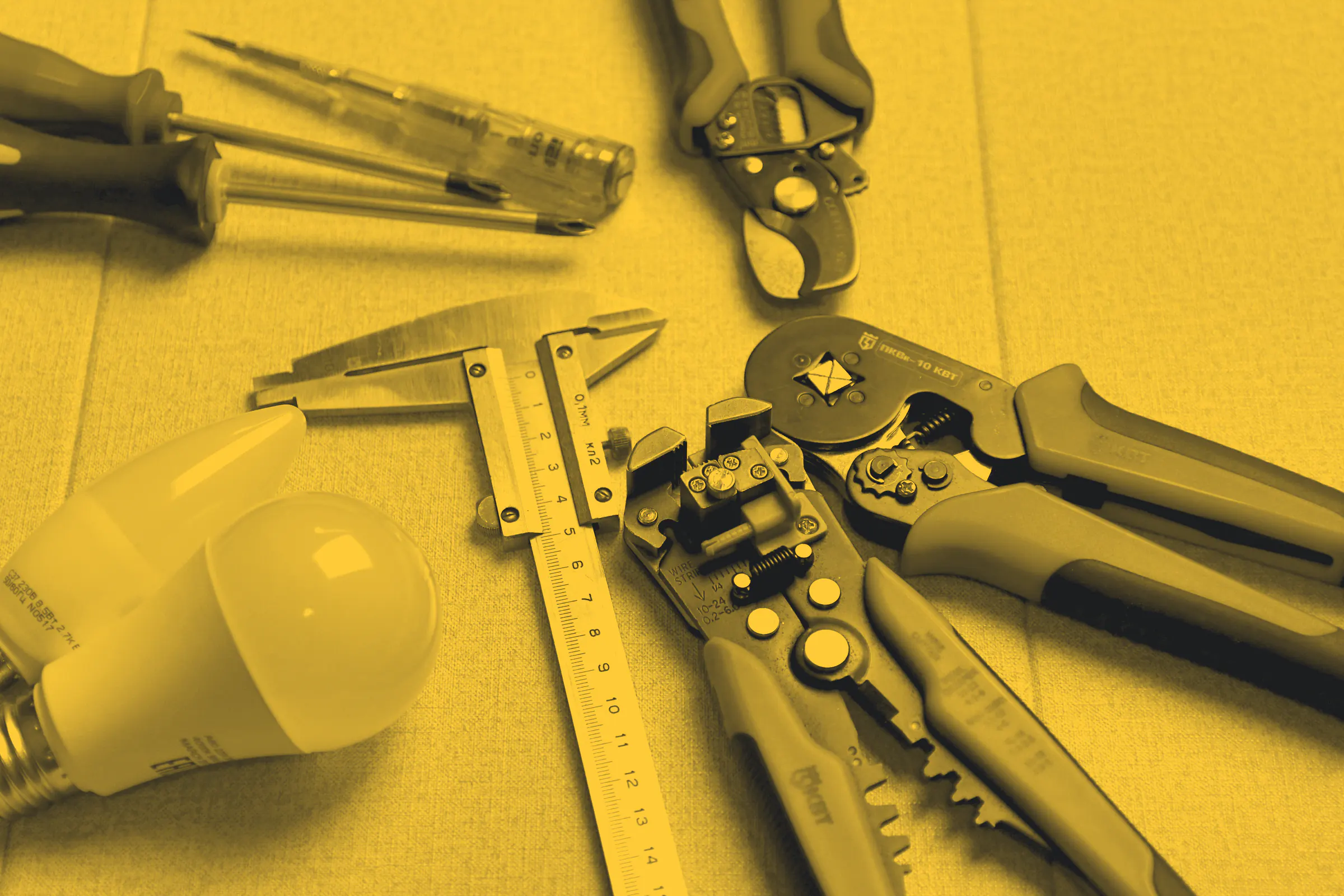
- ToolsTesters, thermal cameras, crimpers, cable pullers and the drills in the van, for theft and damage up to the policy limits.
- VehiclesThe van carries your gear and your stock of cable and fittings. Commercial vehicle cover is for a vehicle used for work, racking included where the policy lists it.
- ContractorsSubbing to a builder or a bigger electrical contractor? They set the limit you carry, and most want proof of your own cover before you pull the first cable.
- Workers compTaking on an apprentice or a second sparky? Workers comp for employees runs under each state's scheme.
- Accident and illnessLadders, roof spaces and live work all carry a risk of injury. If injury or illness stops you working, personal accident and illness cover can pay a weekly benefit, depending on the policy.
- Contract worksBigger jobs, like the full electrical fit-out of a new build, may need the works themselves covered while they're underway.
- Sole tradersA sparky on your own ABN? How public liability, testing gear, the van and cover for yourself fit together when it's just you.
Licences and site rules.
- On site
Builders, head contractors, strata managers and facility managers often ask for a certificate of currency for your public liability before you start: the insurer's short document showing your policy is current. Commercial contracts may also set the cover limit.
- Western Australia
Before you apply for or renew an electrical contractor's licence in WA, check what proof of insurance Building and Energy asks to see, and ask us for a certificate of currency in the right name.
Electrical contractor's licence, Building and Energy WA(opens in a new tab)- Victoria
In Victoria, check with Energy Safe Victoria what insurance registered electrical contractors need to hold.
Registered electrical contractors, Energy Safe Victoria(opens in a new tab)- Other states
Queensland and the other states set their own electrical licence rules, including any insurance a licence asks for. Check with your state's electrical regulator before you apply or renew, and tell us what it wants to see.
What sets the price.
- The work you do: domestic, commercial, industrial, solar and batteries, or data and communications
- Your turnover
- The public liability limit you choose, or the one your licence or contracts set
- How many people work for you, and how much you subcontract
- The value of the tools and testing equipment you insure
- The state you work in
- Your claims history
On the quote form
Pick the one that matches your work. Not sure? Pick the closest and tell us in the comments.
- Electricians - Electrician (inc. QLD)
- Electricians - Electrician (exc. QLD)
How to get electrician insurance.
Tell us about your electrical work.
Domestic, commercial or industrial, any solar, battery or data work, your turnover, who works with you and the limit your licence or contracts ask for. Use the quote form or call us.
We get you quotes.
We ask insurers for quotes and come back to you with what each one covers and what it doesn't, testing gear included.
Choose, then start work.
Cover starts once you pick a policy and the insurer agrees to it. Then ask us for a certificate of currency in the right name for your licence or for site.
Electricians: your questions.
What insurance do I need as an electrician?
Most electricians start with public liability, because builders, strata managers and some state licences ask for it. Cover for tools and testing gear, and for the van, usually comes next, then workers comp if you employ anyone and personal accident cover for yourself. What suits you depends on the work you do, so talk it through with a broker before you decide.
How much does electrician insurance cost?
There's no set price. The insurer works it out from the electrical work you do (domestic, commercial, industrial or solar), your turnover, the public liability limit you choose, how many people work for you, the tools and testing gear you insure, your state and your claims history. Tell us about your work and we'll get you quotes.
Do electricians need public liability insurance?
Often, yes. Some state electrical licences ask for proof of public liability. Electrician public liability insurance is also what builders, strata managers and commercial clients usually ask to see. Check your state's rules with the regulator, and keep a certificate of currency handy for site.
How much public liability tradies needDo I need a certificate of currency for my electrical contractor licence in WA?
Check Building and Energy's current application checklist, which sets out the proof of insurance it needs. A certificate of currency is the insurer's short document showing your policy is current. Ask us for one in the right name before you lodge.
What is a certificate of currency?Is solar and battery work covered?
It can be, if the insurer knows you do it. Many insurers ask about solar and battery installs separately, because the work puts you on roofs and batteries bring their own fire risk. Tell us roughly how much of your work it is, and check the policy names it before you take the job. Designing systems for others is professional indemnity, not public liability.
Is my testing equipment covered?
Testing gear can be covered under tool and equipment cover, for theft and accidental damage, up to the limits in your policy. Some policies set a limit per item or need high-value items listed, so tell us about expensive testers and thermal cameras when you ask for a quote, and check how the policy treats gear left in the van overnight.
Does public liability cover design work?
Usually not. Advice and design, such as a solar layout you draw up for a client, are what professional indemnity is for.
Professional indemnity vs public liabilitySort your cover.
Monday to Friday, 9am to 5pm. Or email mate@tradies365.com.au.