What Are the Biggest Risks for Carpenters?
Carpentry is a fun, rewarding, and practical trade. But there are some risks associated with carpentry that you'll want to be aware of before embarking on your career. If you're looking into becoming a carpenter, or if you're already in this line of work but haven't gotten around to taking out insurance yet, keep reading! We'll cover the biggest risks on the job, how to reduce them, and the insurance carpenters usually carry.
Problems with your finished product
You can be held liable for defects in your finished work. In this case, it would be the customer who brings a claim against you. If your work is faulty, you may find yourself dealing with situations like these:
- The customer wants their money back because they paid for something that was not completed according to their requirements. Insurance usually does not pay to refund a job or to redo your own faulty work, so check what your policy says about defective work before it happens.
- A client files a lawsuit against you because one of their employees suffered an injury related to some aspect of your work, like tripping over a loose ladder or walking into an open door frame, and they want compensation for their medical bills and lost wages (which are often substantial). Liability insurance can help cover the claim and the legal fees associated with defending yourself, depending on the policy.
Property damage
If something goes wrong on a client's job, they may claim against you, for example for faulty work or damage you caused. Damage you cause to a client's property is usually a matter for public liability insurance, up to the limit in the policy. General property insurance is different: it can cover your own property, such as your tools and equipment.
With enough liability cover in place, a carpenter is less likely to pay for costly repairs out of pocket if something goes wrong on the job site.
Tools breakage
Tools cost a lot to replace. You can take out tools and equipment insurance to help protect yourself from these risks, so you can replace the tools you need if something unexpected happens on the job site. Depending on the policy, this type of insurance can pay out if your equipment is damaged or stolen in a variety of ways, including fire damage, storm damage, theft, or burglary.
Theft from utes, vans and job sites is another way carpenters lose tools. Tool insurance can cover theft, depending on the policy and up to its limits, and these 10 tips to stop tool theft cover the basics of keeping your gear safe.
Falls and power tools
Falls from frames, ladders and roofs, and injuries from nail guns and saws, are some of the biggest risks on a carpentry job. A few habits help reduce them:
- Work at height safely: Use edge protection or scaffold when you work on frames and roofs, and set ladders up on firm, level ground.
- Look after your tools: Keep the guards on saws, never bypass the safety on a nail gun, and wear the right eye and hearing protection.
- Keep the site clear: Clear away offcuts, leads and loose tools as you go, so nobody trips or falls.
If one of your employees is hurt at work, that is a matter for workers compensation. If you're a sole trader, workers compensation insurance doesn't cover you (business.gov.au), so look at personal accident and illness cover. Public liability is for injury to other people, not you, and some policies set a height limit or conditions for work at height; read more about carpenters insurance.
Risks of injury to yourself and others
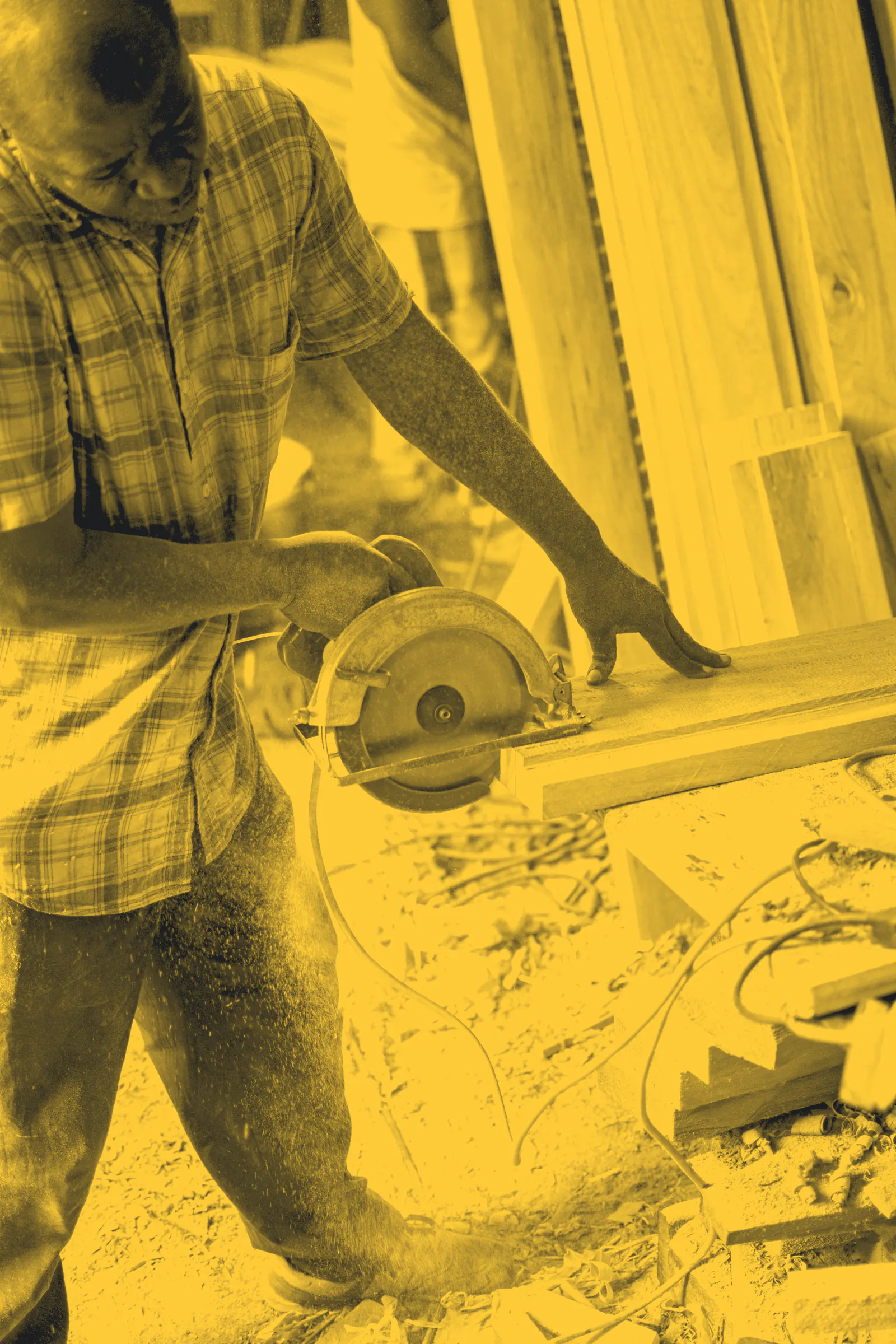
As a carpenter, you are likely to be working with dangerous equipment, so it's important that you know what you're doing. Always wear safety gear and be aware of your surroundings. Don't overwork yourself or use defective tools; this will only put both yourself and others at risk of injury.
Public liability insurance can cover you in these circumstances if someone gets hurt on site or if their property is damaged as a result of your work. It can also cover incidents away from the site that still happen in the course of your business. Accidents involving your vehicle on the road are usually a matter for commercial vehicle insurance instead.
Fire risks
After a fire, general property insurance can cover your insured tools and equipment, up to the limits in the policy. Flood is often excluded unless the policy includes it, so check the wording.
Covers carpenters usually look at
Most carpenters carry some form of insurance, and some of it can be a legal requirement. If you employ workers, Australian law requires you to have insurance to cover them if they get sick or injured because of work (Safe Work Australia), and some states and territories need public liability insurance for certain occupations (business.gov.au). Head contractors and clients often ask for public liability insurance too. Read more about insurance for carpenters.
Even if you work for yourself, it is worth protecting yourself from the liabilities that can arise. For many carpenters that means public liability insurance, workers compensation if they employ people, and commercial vehicle insurance for the ute or van. Some carpenters also look at business interruption cover, which can pay ongoing business costs if an insured event, such as a fire, stops the business for a while.
Public liability insurance covers damage to other people's property, not your own. If your business owns physical assets like tools, equipment or a workshop, look at general property or tool insurance for them.
What a policy covers depends on its wording, limits and excesses, and the insurer decides whether to offer cover and whether a claim is paid. Read the PDS (Product Disclosure Statement) before you decide.
If you are a carpenter, it's important to understand which covers fit your work. You may not think that you need anything other than the standard comprehensive cover on your home and car, but there are many risks associated with carpentry that insurance can help with. If you have any questions about which covers apply to your work, contact us, or get a quote.
General advice only. Read the policy documents we send with your quote before you decide.